Memory and repetition after loss
Simple PassionMemory and repetition after loss is the narrator’s effort to turn absence into a return: she reconstructs A’s body, revisits places and objects associated with the time before and during their relationship, and measures the present against remembered dates. Repetition gives grief a pattern and briefly makes the past seem recoverable, but it cannot reproduce the lost relationship. As the world acquires meanings beyond A, the memories begin to loosen; the writing that preserves them is itself only a remainder of lived experience.
Reconstructing the Absent
The work of remembering begins in the body. The narrator tries to recall A from his hair and green eyes to the shape of his shoulders and other physical details. She recognizes how close this reconstruction comes to hallucination, troubling the boundary between memory and madness. In another solitary moment, she experiences her own pleasure as if it belonged to him. These episodes show memory not as detached recollection but as an attempt to recover, through the body and imagination, a presence that is no longer available.
Absence also redirects ordinary choices toward A. The narrator imagines that even a possible AIDS screening might be something he had left her. Clothes once bought to please him lose their purpose when he is gone; a shawl needed for the cold carries the thought that he will never see it. In these instances, memory does not merely preserve what happened. It continues to organize the meaning of new objects and actions around the absent relationship.
Repetition as a Desired Return
The narrator describes her thoughts and actions as a repetition of history, driven by a wish to turn the present back into the past and reopen the possibility of happiness. She makes conditional wishes in exchange for charitable donations if A calls, imagines encounters and letters that never occur, and answers words he has not said. Returning to a place where they had been together, she wears the same suit and tries to believe that identical circumstances will produce the same effect. At the end of such a day, she recognizes that she had genuinely expected his call.
During insomnia, she mentally returns to Venice, where she had spent a week before meeting A. She retraces walks along the Zattere and the alleys of Giudecca Island, and inventories the room at La Calcina Hotel: its narrow bed, blocked window, tablecloth, and books. The room belongs to a time before the relationship began, yet she hopes that recovering it in exhaustive detail will allow her to relive the events. Sometimes the imagined return becomes an urge to travel back to the same hotel and room. The precision of the inventory reveals both the power and the limit of the effort: she can name what was there, but naming cannot make the past recur.
Calendars and public events become further instruments of repetition. She counts the weeks since A left and connects occasions such as the opening of a shopping mall, Gorbachev’s visit to Paris, and Chang’s victory at Roland-Garros to the time when A was present. Even mundane scenes—the archive room at La Sorbonne, Boulevard Voltaire, trying on a skirt at Benetton—return vividly enough that she wonders why she cannot enter the remembered moment as easily as another room. Dreams extend the wish to reverse time: her deceased mother is alive again, and a missing child is revived to retrace the events leading to her death. Other dreams turn on lost belongings, missed trains, or encounters with A, but their changing and sometimes contradictory scenes cannot settle the past into a stable return.
Memory, Writing, and Historical Time
The narrator’s account distinguishes the time of passion from the time of writing. She can attach the relationship to the Algerian October Riots, the weather on 14 July 1989, and the purchase of a blender in June before a planned meeting. By contrast, she cannot link particular pages written after A’s departure to a rainstorm or to public events such as the Fall of the Berlin Wall or the execution of Nicolae and Elena Ceaușescu. The relationship’s lived time remains sharply marked in memory, while the time in which it is written is harder to date through external events.
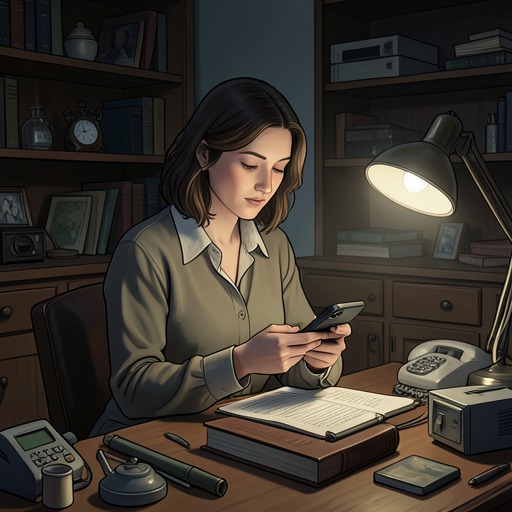
Writing initially seeks to remain inside the age of passion, when choices from films to lipstick were directed toward one person. Its past tense gives the experience the form of something repeated, and writing produces a new pain that replaces the earlier anguish of waiting for calls and visits. The toweling bathrobe A wore at her home makes the difference between private object and written record concrete: rereading the pages brings distress comparable to seeing and touching the robe, but she imagines that the book may continue to mean something to others after the robe has become only a discarded possession. Writing may even be an attempt to save the robe from oblivion.
Yet writing does not end grief. Once the pen is set down, the narrator still longs for A’s voice, accent, and touch, and imagines him living an unknown life in a cold city. The written A is more accessible than the real man, but the writing cannot restore him or produce the unexpected. She continues small acts that sustain hope despite having no rational grounds for it, including playing patience, giving a ten-franc coin to a beggar at Auber Metro station, and wishing that A will call and return. In this sense, writing joins the other practices of waiting: it can hold a possibility open without making it come true.
The Memory’s Unmaking
The narrator’s attachment to recollection is also visible in her reluctance to reread books she had skimmed while A was present. She imagines that the waiting and dreams of that period have crystallized in their pages and might be recovered intact, but postpones opening them as if turning a forbidden page could bring bad luck. The book becomes a potential container of the past and, at the same time, an object she fears to approach.
Later, a fragment of conversation on the Metro returns an old memory: two girls mention a house in Barbizon, a place A had told her he visited one Sunday with his wife. The association is no longer wholly governed by him; Barbizon also becomes a memory like Brunoy, linked to an old friend. The narrator asks whether the world is beginning to mean something again outside A. The signs that once assembled themselves into an unwritten novel of the passion—the Moscow Circus cat trainer, the bathrobe, Barbizon—are beginning to separate. The book that remains is a minor trace of that living text, and she anticipates that it too may one day mean nothing to her.
Even with that recognition, she cannot readily part with the written pages, just as she had been unable to leave A while waiting for him. Having finished the work, she faces the prospect of other people reading it and judging it by what society considers normal. Questions about whether it is autobiography, and the demand to justify its choices, make publication a new exposure that she had not considered while writing. Memory and repetition thus lead not to a recovered past but to a changed relation with its record: the text preserves what has begun to fade, while making visible that neither the living experience nor its written remainder can stay permanently intact.
Private Memory and Public Catastrophe
In February 1991, the narrator sets her private recollections beside the war that has broken out between Iraq and the Western coalition. News of the conflict brings the familiar anxiety of waiting and a frustrated desire to know what will happen, including fears of a land offensive, chemical warfare, or an attack in Paris. The resemblance to waiting during her passion is limited, however: this crisis leaves no room for fantasy or imagination. Public reports and anticipated disasters make the contrast clear between personal repetition, which invents possible returns, and a war whose consequences are not simply imagined into being.
The war also marks a change in the writing’s relation to time. The narrator had considered ending the book as though it could be detached from the events of the world, but recognizes that while the pages remain personal and within reach the act of writing remains open to new developments. Historical time interrupts the attempt to preserve the passion as a closed past. Memory continues to repeat, but the present keeps arriving with facts that repetition cannot reverse.